SIMPLE RESOLUTION OF COMPLEX CESAREAN SECTION 

THEORETICAL AND PRACTICAL COURSE

9–10 October 2026 | Riga, Latvia

Theoretical Framework, Learning Workshops

Workshop Format

  • Expert lectures (evidence-based, case-driven)
  • High-definition surgical video analysis
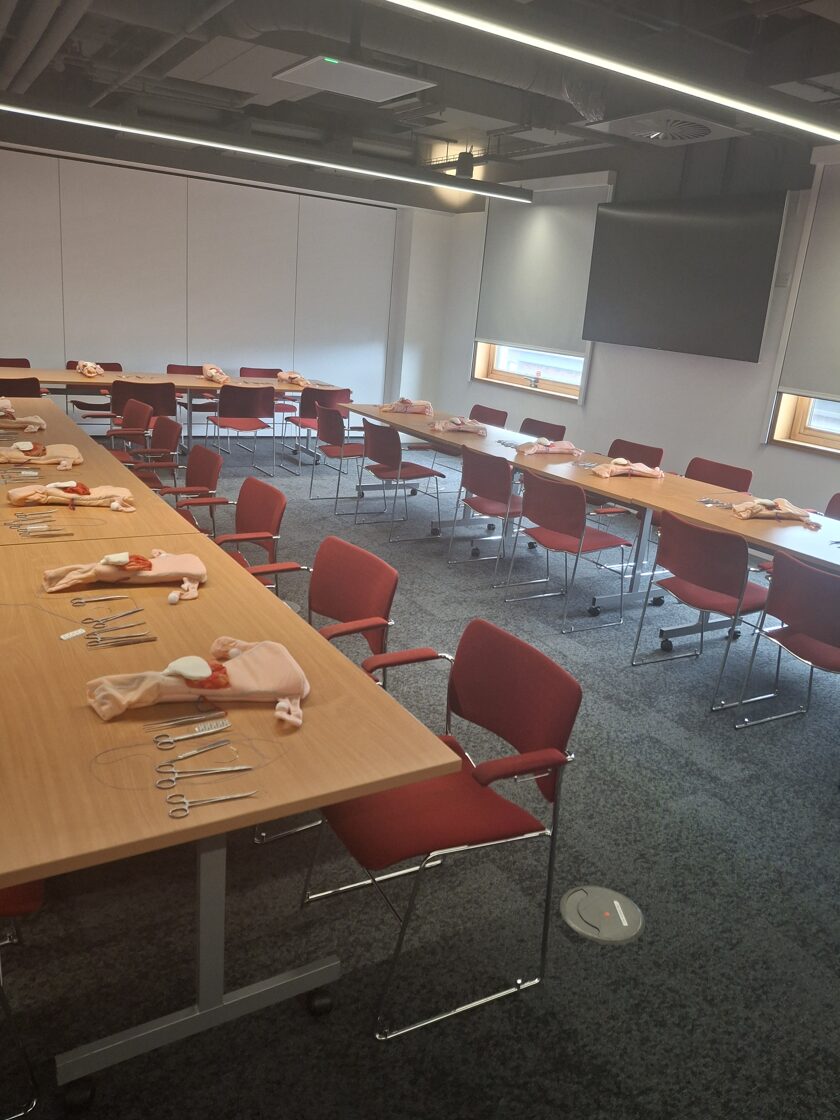
  • Hands-on simulation (complex cesarean & PAS scenarios)
  • Interactive case discussions
  • Practical tips transferable to daily clinical practice

Course Objectives

At the end of the course, participants should be able to

  • Describe the key anatomical areas and vascular pedicles of the female genital tract relevant to complex cesarean delivery
  • Identify and accurately represent pelvic spaces and demonstrate their safe surgical access
  • Describe and perform effective hemostasis of the lower uterine segment
  • Recognize and repair uterine dehiscence or thinning encountered during cesarean delivery
  • Assess and manage uterine fibroids complicating cesarean delivery, including their impact on incision placement, fetal extraction, and uterine closure
  • Describe and perform internal aortic compression as a damage-control maneuver in obstetric hemorrhage
  • Identify ultrasound markers associated with complex cesarean delivery, including placenta previa, uterine dehiscence, abnormal placental adherence, and altered lower uterine segment anatomy
  • Establish a practical intraoperative decision-making algorithm for incidental findings complicating cesarean delivery
  • Describe and select appropriate therapeutic options for abnormal placental attachment encountered during cesarean section
  • Perform operative staging and surgical decision-making in cases of myometrial dehiscence with or without placental intrusion
  • Apply uterine-sparing hemostatic techniques with minimal blood loss
  • Select and perform segment-specific uterine hemostatic procedures according to bleeding source
  • Plan and perform a high uterine incision (high hysterotomy) when indicated to prevent extension and future myometrial defects
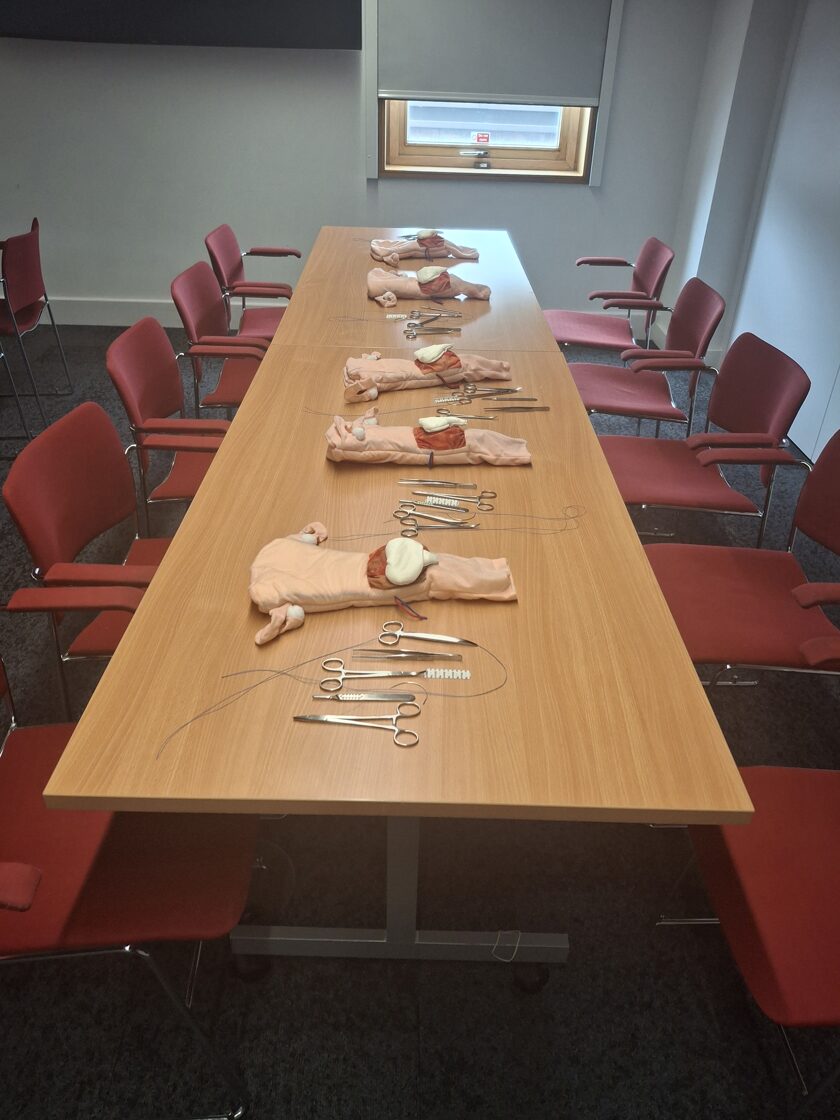
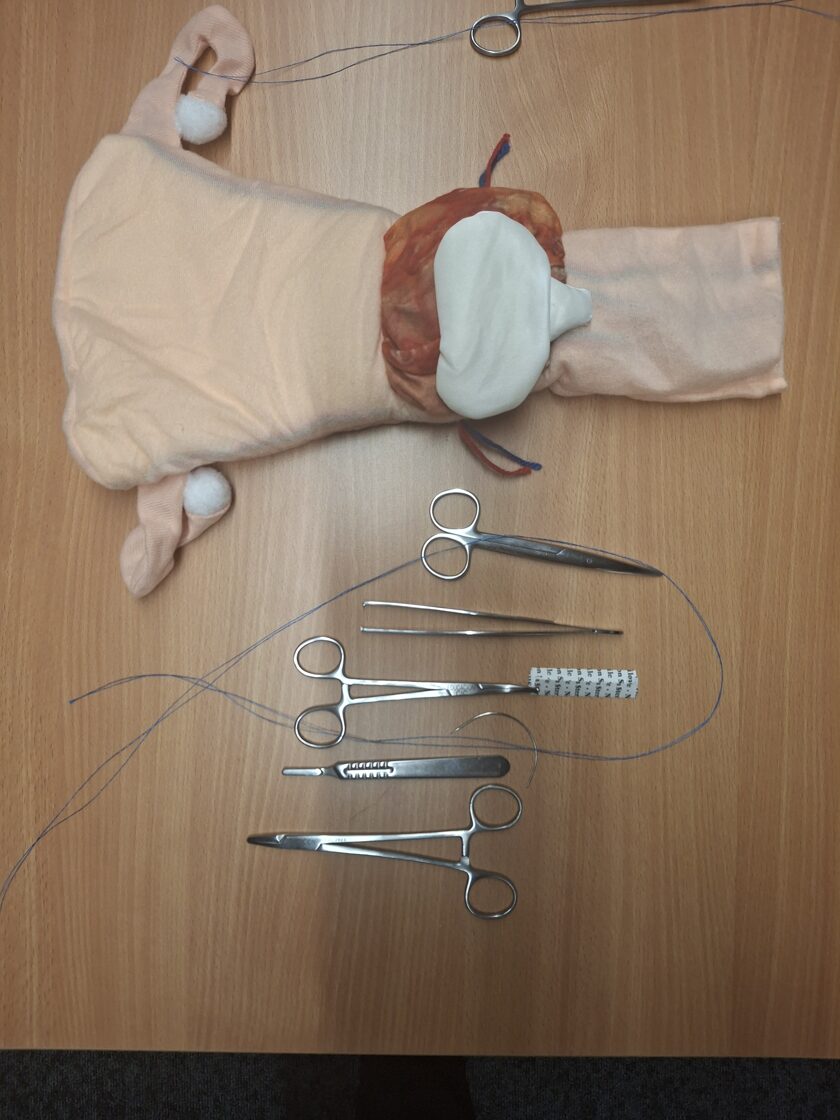
Simulacion__MSTH_1.jpg

Simulacion__MSTH.jpg

Simulacion__OSCS.jpg

Target audience

  • Consultant obstetricians
  • Maternal–Fetal Medicine specialists
  • Senior obstetrics & gynecology trainees

Venue

RSU Medical Innovation and Training Centre (MITC), Anniņmuižas bulvāris 26A, Riga, LV-1067, Latvia

Fees

  • up to 16 August - 300 EUR
  • from 17 August - 400 EUR

limited number of places

Course Faculty

José Palacios‑Jaraquemada

Argentina

Professor José M. Palacios-Jaraquemada is an internationally recognized obstetric surgeon, anatomist, and researcher, regarded as a global authority on placenta accreta spectrum (PAS), abnormal invasive placentation, postpartum hemorrhage, and uterine-preserving surgery. He pioneered the concept of PAS as a surgical and anatomical spectrum, introducing phenotype-based classification and individualized operative strategies that have reshaped modern PAS management and influenced global guidelines and referral-center practice.

Albaro Jose Nieto-Calvache

Colombia

Albaro Jose Nieto-Calvache is an obstetrician specialized in teaching and intensive care. He works in Colombia and leads the Complex Obstetrics Surgery and Placenta Accreta Spectrum (PAS) Program at Fundacion Valle de Lili. He has a special interest in the difficulties faced by women with PAS in resource-limited settings and has focused his research efforts on this topic on which he has published more than 80 scientific papers. He is also professor at the ICESI University in Colombia.
Dr Nieto-Calvache is part of the Latin American Group for the Study of the Placental Accreta Spectrum, as well as other scientific societies focused on PAS (IS-PAS and PAS2) and PPH (FIGO and WAPM).
Dr. Nieto has a PhD at the University of Amsterdam with his thesis oriented to the use of telemedicine in accreta.

Natalija Vedmedovska

Latvia

Professor Natalija Vedmedovska is a fetal–maternal medicine specialist and internationally recognized expert in advanced obstetric ultrasound. She serves as ISUOG Ambassador and is actively involved in international education and guideline dissemination in prenatal imaging. Her clinical expertise includes detailed assessment of placental location, lower uterine segment anatomy, cervical evaluation, and ultrasound-based risk stratification in high-risk pregnancies. Professor Vedmedovska plays a key role in translating complex imaging findings into practical clinical and surgical decision-making, and is widely involved in teaching, mentoring, and multidisciplinary collaboration to improve maternal and fetal outcomes.

Anna Miskova

Latvia

Dr Anna Miskova is an Associate Professor of Obstetrics and Gynecology at Rīga Stradiņš University and Head of the Birth Centre at Rīga Maternity Hospital, the largest maternity unit in Latvia. She is a senior obstetrician–gynecologist with extensive experience in complex cesarean delivery, high-risk obstetrics, and operative decision-making in challenging surgical scenarios. Her academic and clinical interests focus on surgical anatomy, prevention of maternal morbidity, ultrasound-guided operative planning, and simulation-based training. Dr Miskova is actively involved in international education, research, and multidisciplinary training to improve safety and outcomes in modern obstetric practice.

Maira Jansone

Latvia

Dr Maira Jansone is a senior obstetrician–gynecologist with extensive clinical experience in operative obstetrics, intrapartum care, and the management of complex labor and delivery scenarios. She is actively involved in clinical practice, teaching, and professional development, with a strong focus on maternal safety, evidence-based decision-making, and teamwork in high-risk obstetrics. Dr Jansone contributes to multidisciplinary education and skills training to improve outcomes in challenging obstetric situations and strengthen practical competencies in modern obstetric care.